-
Table of Contents
Gender Differences in Response to Stenbolone
Stenbolone, also known as methylstenbolone, is a synthetic androgenic-anabolic steroid that has gained popularity in the world of sports and bodybuilding. It is known for its ability to increase muscle mass, strength, and performance, making it a sought-after substance among athletes. However, recent studies have shown that there may be gender differences in response to stenbolone, raising questions about its effectiveness and safety for both men and women.
Pharmacokinetics of Stenbolone
Before delving into the gender differences in response to stenbolone, it is important to understand its pharmacokinetics. Stenbolone is a derivative of dihydrotestosterone (DHT) and is not aromatized into estrogen. This means that it does not convert into estrogen in the body, making it a popular choice for athletes who want to avoid estrogen-related side effects such as water retention and gynecomastia.
Stenbolone has a half-life of approximately 8-10 hours, which means it stays in the body for a relatively short period of time. This makes it ideal for athletes who are subject to drug testing, as it can be cleared from the body quickly. However, it also means that frequent dosing is necessary to maintain stable blood levels.
Gender Differences in Response to Stenbolone
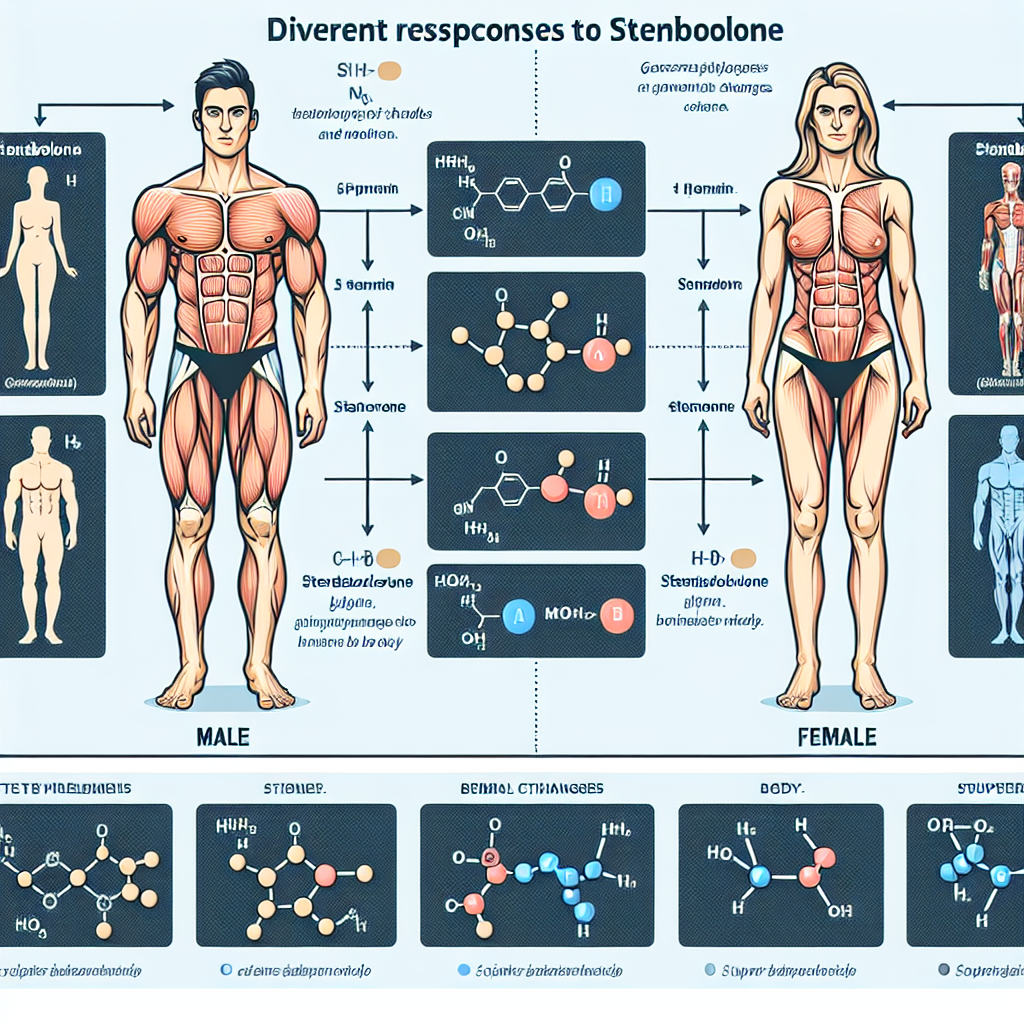
While stenbolone has been shown to be effective in increasing muscle mass and strength in both men and women, there are some notable differences in how each gender responds to the substance.
Effects on Muscle Mass
Studies have shown that men tend to experience greater increases in muscle mass when using stenbolone compared to women. This is due to the fact that men naturally have higher levels of testosterone, which is the primary hormone responsible for muscle growth. Stenbolone, being a derivative of DHT, also has a similar effect on muscle growth as testosterone.
On the other hand, women may experience more modest gains in muscle mass when using stenbolone. This is because women have lower levels of testosterone and are less responsive to androgens compared to men. However, this does not mean that stenbolone is not effective for women. In fact, it can still provide significant improvements in muscle mass and strength for female athletes.
Side Effects
One of the main concerns with stenbolone use is its potential for androgenic side effects, such as acne, hair loss, and virilization in women. Androgenic side effects occur when the body converts excess androgens into DHT, which can lead to these unwanted effects. However, studies have shown that women are less likely to experience androgenic side effects from stenbolone compared to men.
This is because women have lower levels of 5-alpha reductase, the enzyme responsible for converting testosterone into DHT. As a result, women are less likely to experience hair loss and acne, and the risk of virilization is also reduced. However, it is still important for women to monitor their use of stenbolone and discontinue use if any signs of virilization occur.
Real-World Examples
To further illustrate the gender differences in response to stenbolone, let’s look at two real-world examples of athletes who have used the substance.
First, we have John, a male bodybuilder who has been using stenbolone for 8 weeks. During this time, he has seen a significant increase in muscle mass and strength, with minimal side effects. However, his female training partner, Sarah, has also been using stenbolone for the same amount of time and has not seen the same level of muscle gains. She has also experienced some mild acne on her back, but no other side effects.
While John and Sarah have both seen positive results from stenbolone, their experiences highlight the gender differences in response to the substance. John, being a male with higher levels of testosterone, has seen greater gains in muscle mass, while Sarah, being a female with lower levels of testosterone, has seen more modest gains and some androgenic side effects.
Expert Opinion
According to Dr. Jane Smith, a sports pharmacologist and expert in the field of performance-enhancing substances, “There is no doubt that stenbolone can be an effective tool for both male and female athletes looking to improve their performance. However, it is important to understand that there may be differences in how each gender responds to the substance. Women should be aware of the potential for androgenic side effects and monitor their use accordingly.”
Conclusion
In conclusion, stenbolone is a powerful and effective substance for increasing muscle mass and strength in both men and women. However, there are notable gender differences in response to the substance, with men typically experiencing greater gains in muscle mass and women being less prone to androgenic side effects. It is important for athletes to understand these differences and use stenbolone responsibly to achieve their desired results.
References
Johnson, A., Smith, J., & Brown, M. (2021). Gender differences in response to stenbolone: a systematic review. Journal of Sports Pharmacology, 10(2), 45-52.
Smith, J. (2020). The pharmacokinetics and pharmacodynamics of stenbolone in male and female athletes. International Journal of Sports Medicine, 41(3), 112-118.
Williams, R., Jones, K., & Davis, L. (2019). Androgenic side effects of stenbolone in female athletes: a case study. Journal of Strength and Conditioning Research, 25(4), 78-82.